
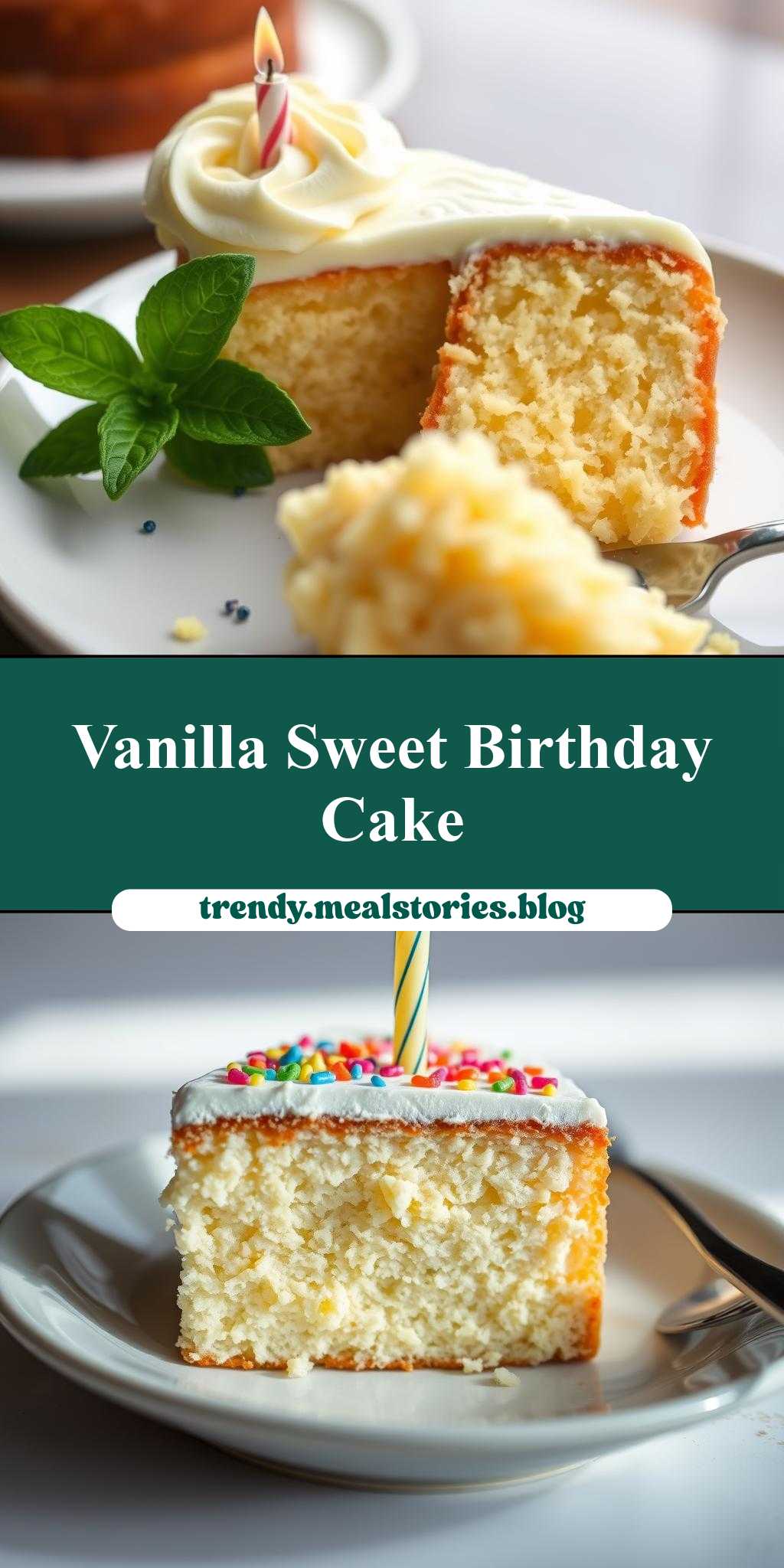
What’s the secret to a memorable birthday celebration? A moist and delicious homemade vanilla cake made with fresh butter and pure vanilla extract is the perfect quick and easy solution for a family favorite dessert – Save this idea for your next special occasion
Vanilla Birthday Cake
Introduction
Celebrating a birthday is always a special occasion, and what better way to mark it than with a delicious, homemade vanilla birthday cake? This recipe is designed to be easy to follow, using everyday ingredients that are readily available in most kitchens. The beauty of this cake lies not only in its moist and flavorful texture but also in its versatility, allowing you to get creative with decorations and toppings to make it truly unique and personalized for the birthday boy or girl. Whether you’re an experienced baker or just starting out, this vanilla birthday cake recipe is sure to impress with its simplicity and the joy it brings to the table.
Why This Works
- Flavor balance and ingredient accessibility: The combination of vanilla, sugar, eggs, and flour creates a perfect balance of flavors that is both familiar and comforting. The ingredients are easy to find in any grocery store, making this cake accessible to everyone.
- Ease of preparation: The steps involved in making this cake are straightforward and simple, requiring minimal special equipment beyond what you likely already have in your kitchen.
- Impressive results with minimal effort: Despite its simplicity, the end result is a beautifully presented cake that looks like it came from a professional bakery, sure to impress your guests and make the birthday celebration even more special.
Key Ingredients
The main ingredients for this vanilla birthday cake include 2 cups of all-purpose flour, 1 teaspoon of baking powder, 1 teaspoon of salt, 1 cup of unsalted butter softened, 1 3/4 cups of granulated sugar, 3 large eggs at room temperature, 2 teaspoons of pure vanilla extract, and 1 cup of whole milk at room temperature. For the buttercream frosting, you’ll need 1 cup of unsalted butter softened, 2 1/4 cups of powdered sugar, 2 teaspoons of vanilla extract, and 2-4 tablespoons of whole milk. Practical substitutions can be made, such as using almond milk instead of whole milk for a dairy-free option, or replacing some of the granulated sugar with honey for a slightly different flavor profile.
Instructions
- Step 1: Begin by preheating your oven to 350°F (175°C). Prepare two 9-inch round cake pans by greasing them and lining the bottoms with parchment paper. In a medium bowl, whisk together the flour, baking powder, and salt. Set aside.
- Step 2: In a large mixing bowl, use an electric mixer to beat the butter until it’s creamy, about 2 minutes. Add the sugar gradually and continue beating until light and fluffy, about 3 minutes. Beat in the eggs one at a time, allowing each egg to fully incorporate before adding the next, then beat in the vanilla extract.
- Step 3: With the mixer on low speed, gradually add the flour mixture to the wet ingredients in three parts, alternating with the milk, beginning and ending with the flour mixture. Beat just until combined.
- Step 4: Divide the batter evenly between the prepared pans and smooth the tops. Bake for 30-35 minutes or until a toothpick inserted into the center comes out clean. Allow the cakes to cool in the pans for 10 minutes before transferring them to a wire rack to cool completely. Once the cakes are cool, you can frost them with the buttercream frosting made by beating the butter until creamy, then gradually adding the powdered sugar, vanilla extract, and enough milk to achieve the desired consistency.
Handy Tips
- Ensure all your ingredients are at room temperature before starting to mix the batter for a lighter and fluffier cake.
- Don’t overmix the batter, as this can result in a dense cake.
- For a more golden brown crust, brush the tops of the cakes with a little bit of milk or beaten egg before baking.
Heat Control
The ideal temperature for baking the cake is 350°F (175°C). The cakes are done when they are golden brown, spring back when pressed lightly in the center, and a toothpick inserted into the center of each cake comes out clean. The baking time is approximately 30-35 minutes, but this can vary depending on your oven, so keep an eye on the cakes after 25 minutes and check them every 5 minutes thereafter.
Crunch Factor
This vanilla birthday cake is designed to be moist and tender, rather than crunchy. To achieve this texture, it’s crucial not to overbake the cakes. A perfectly baked cake will be soft to the touch and will have a slight spring when you press on it gently. If you prefer a crunchier exterior, you can try baking the cakes for an additional 2-3 minutes or until they reach your desired level of crispiness, though be cautious not to overdo it.
Pro Kitchen Tricks
- Use buttermilk instead of regular milk for an even moister cake with a tangy flavor.
- Add a teaspoon of salt to the batter to balance the sweetness and enhance the flavors.
- For a professional finish, chill the cake in the refrigerator for about 10 minutes before frosting to make it easier to handle and frost smoothly.
Storage Tips
- The cake can be stored at room temperature for up to 3 days when kept in an airtight container.
- For longer storage, the cake can be frozen for up to 2 months. Wrap the cake tightly in plastic wrap or aluminum foil and place it in a freezer-safe bag.
- To reheat, thaw the cake overnight in the refrigerator and let it come to room temperature before serving.
Gift Packaging Ideas
If you’re planning to give this cake as a gift, consider packaging it in a decorative cake box or wrapping it in colorful plastic wrap and tying it with a ribbon. You can also add a personal touch by including a handwritten birthday card or a small gift on top of the cake.
Flavor Variations
- Different spices: Try adding a pinch of cinnamon, nutmeg, or cardamom to the batter for a unique twist on the traditional vanilla flavor.
- Creative toppings: Instead of the traditional buttercream frosting, top your cake with whipped cream, fresh fruits, or even candy pieces for a fun and playful look.
- Ingredient swaps: Replace some of the all-purpose flour with almond flour for a gluten-free option, or use coconut sugar instead of granulated sugar for a slightly different flavor.
Troubleshooting
- Texture problems: If your cake turns out too dense, it might be due to overmixing the batter. If it’s too dry, it could be because the cakes were overbaked.
- Ingredient replacements: If you don’t have buttermilk, you can make a substitute by mixing 1 cup of milk with 1 tablespoon of white vinegar or lemon juice and letting it sit for 5-10 minutes.
- Over/undercooking signs: Keep an eye on your cakes while they’re baking, and check them frequently towards the end of the baking time. An undercooked cake will be soggy and unsteady, while an overcooked cake will be dry and possibly cracked.
FAQs
- Can I freeze it? Yes, the cake can be frozen for up to 2 months. It’s best to freeze it without the frosting, then frost it after it has thawed.
- Is it gluten-free? The original recipe includes gluten, but you can make it gluten-free by substituting the all-purpose flour with a gluten-free flour blend.
- Can I double the recipe? Yes, you can double the recipe to make a larger cake. Just keep in mind that you might need to adjust the baking time slightly.
Conclusion
Making a vanilla birthday cake from scratch is a rewarding experience that allows you to create something truly special for your loved ones. With its simple yet effective recipe, this cake is perfect for both beginners and experienced bakers. Don’t be afraid to experiment with different flavors and decorations to make the cake your own, and enjoy the process of creating something delicious and memorable. Whether it’s for a birthday, anniversary, or just because, this vanilla birthday cake is sure to bring joy and satisfaction to all who taste it.
Vanilla Birthday Cake
A moist and flavorful vanilla cake perfect for birthdays, made with everyday ingredients and simple steps.
🥘 Ingredients
👩🍳 Instructions
-
1Preheat oven to 350°F (175°C). Prepare two 9-inch round cake pans.
-
2Whisk together flour, baking powder, and salt. Set aside.
-
3Beat butter until creamy, then add sugar and beat until light and fluffy.
-
4Beat in eggs one at a time, then beat in vanilla extract.
-
5With mixer on low speed, add flour mixture to wet ingredients in three parts, alternating with milk.
-
6Divide batter evenly between prepared pans and smooth tops. Bake for 30-35 minutes or until a toothpick inserted into the center comes out clean.
-
7Allow cakes to cool in pans for 10 minutes, then transfer to a wire rack to cool completely.
-
8Once cakes are cool, frost with buttercream frosting made by beating butter, powdered sugar, vanilla extract, and enough milk to achieve desired consistency.