
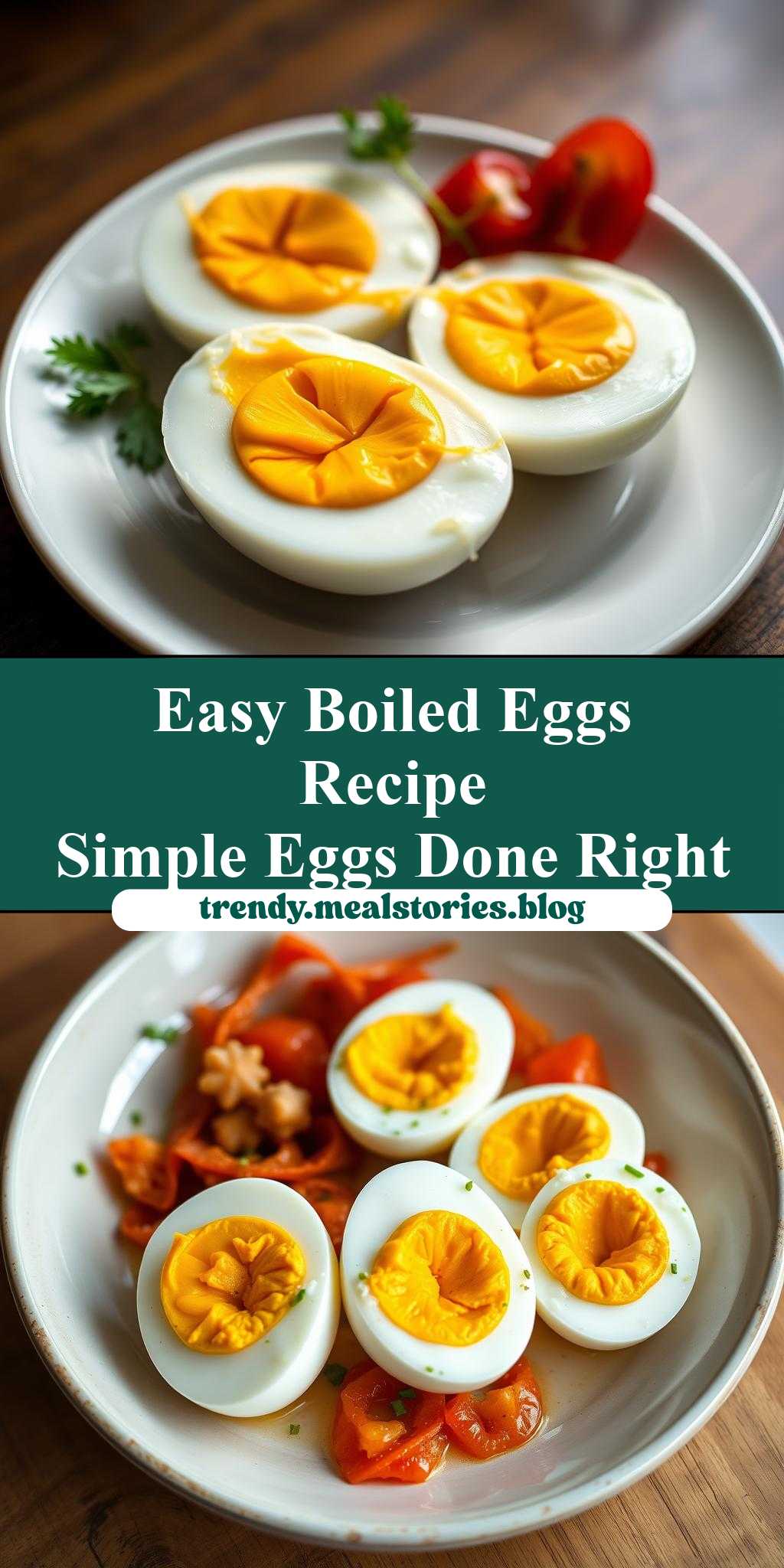
What’s the secret to cooking flawless boiled eggs every time? It’s all about the timing and using fresh eggs. This quick and easy method yields perfect results for a homemade snack or weeknight dinner. Save this idea for a simple family favorite that’s ready in no time, try it soon and enjoy the perfect boiled eggs.
Perfect Boiled Eggs
Introduction
There’s something undeniably satisfying about biting into a perfectly boiled egg – the firm white exterior giving way to a creamy, golden yolk that’s just set. It’s a simple pleasure that can elevate any meal, from a humble breakfast to a sophisticated salad or snack. The beauty of boiled eggs lies in their ease of preparation, the depth of flavor they can offer, and the creativity they inspire when it comes to using everyday ingredients. Whether you’re a fan of classic simplicity or adventurous twists, the perfect boiled egg is an accessible delight that can be enjoyed by anyone, anywhere.
Why This Works
- Flavor balance and ingredient accessibility: Boiled eggs are a masterclass in minimalist flavor, requiring just eggs and water, yet offering a canvas for countless seasonings and toppings.
- Ease of preparation: The process of boiling eggs is straightforward and hard to mess up, making it a staple for beginners and seasoned cooks alike.
- Impressive results with minimal effort: Achieving the perfect doneness, whether you prefer a runny yolk or a fully set one, is surprisingly easy and consistently impressive.
Key Ingredients
The main ingredient, of course, is eggs. The quality of the eggs can affect the taste and texture, so opting for fresh, possibly organic or farm-fresh eggs can make a noticeable difference. Beyond the eggs, the only other necessary ingredient is water. However, for added flavor, you might consider salt, vinegar, or various seasonings and toppings such as paprika, chili flakes, chopped herbs, or creamy sauces.
Instructions
- Step 1: Begin by placing the eggs in a single layer at the bottom of a saucepan or pot. Add enough cold water to the pan to cover the eggs by about an inch. For extra flavor, you can add a pinch of salt or a tablespoon of vinegar to the water.
- Step 2: Place the pan over high heat and bring the water to a boil. Once boiling, reduce the heat to a simmer (medium-low heat) and let cook for 10-12 minutes for large eggs. The cooking time can vary based on the desired doneness of the yolk and the size of the eggs.
- Step 3: After the cooking time has elapsed, immediately transfer the eggs to a bowl of ice water to stop the cooking process. This step is crucial for preventing overcooking and making the eggs easier to peel.
- Step 4: Once the eggs have cooled enough to handle, crack them gently and peel off the shells. Rinse the eggs with cool water to remove any remaining bits of shell. Your perfectly boiled eggs are now ready to be seasoned or topped as desired.
Handy Tips
- Using older eggs can make them easier to peel after boiling. If you’re having trouble with fresh eggs, try letting them sit in the fridge for a few days before boiling.
- Avoid overcooking, as this can make the yolks dry and the whites rubbery. Adjust the cooking time based on the size of your eggs and your personal preference for yolk doneness.
- For easier peeling, use a steamer basket to steam the eggs instead of boiling them directly in water. The steam helps loosen the bond between the egg white and the shell.
Heat Control
The ideal temperature for boiling eggs is a rolling boil, which is then reduced to a simmer. The timing is crucial: for large eggs, 10-12 minutes usually yields a perfectly set white and a yolk that’s just slightly runny. However, this time can be adjusted based on personal preference and egg size. Signs of doneness include the eggs spinning smoothly on their sides when removed from the water and placed on a flat surface – a hard-boiled egg will spin more smoothly than a raw or soft-boiled one.
Crunch Factor
The crunch factor in boiled eggs primarily comes from the texture of the egg white, which should be firm but not hard. Achieving the right crunch involves not overcooking the eggs and using the ice bath to stop the cooking process promptly. For added crunch, consider topping your boiled eggs with toasted nuts, seeds, or crispy bacon bits.
Pro Kitchen Tricks
- Use a timer to ensure you don’t overcook your eggs. The difference between perfectly cooked and overcooked can be as little as 30 seconds.
- Shock the eggs in an ice bath after cooking to make peeling easier and to stop the cooking process immediately.
- For deviled eggs or egg salad, use a pastry bag or a ziplock bag with a corner cut off to fill or pipe the egg yolks for a more polished presentation.
Storage Tips
- Hard-boiled eggs can be stored in the refrigerator for up to a week. Keep them in a covered container and ensure they are cooled completely before refrigeration.
- For reheating, it’s best to use cold eggs from the refrigerator and let them come to room temperature or gently warm them by wrapping in a damp paper towel and microwaving for a few seconds.
- The best containers for storing boiled eggs are airtight, such as glass containers with lids or plastic containers that can keep moisture out.
Gift Packaging Ideas
Boiled eggs can be a thoughtful and healthy gift, especially when presented nicely. Consider packaging them in decorative jars or containers, topped with a layer of paprika or chopped fresh herbs for color. You can also wrap individual eggs in plastic wrap or aluminum foil and place them in a gift basket filled with other snacks or gourmet items.
Flavor Variations
- Different spices: Try adding a sprinkle of smoked paprika, garlic powder, or onion powder to your boiled eggs for a smoky, savory flavor.
- Creative toppings: Chopped fresh herbs like parsley, dill, or chives can add a bright, fresh flavor. You can also top your eggs with pickled ginger, wasabi, or hot sauce for an Asian-inspired twist.
- Ingredient swaps: For a vegan alternative, consider using tofu or tempeh marinated in a mixture that mimics the flavor and texture of boiled eggs.
Troubleshooting
- Texture problems: If your eggs are too hard or too soft, adjust your cooking time. For eggs that are difficult to peel, try using older eggs or steaming them instead of boiling.
- Ingredient replacements: If you’re looking for alternatives to traditional eggs, options like egg substitutes or plant-based egg products can be used in boiling, though results may vary.
- Over/undercooking signs: Overcooked eggs will have a greenish ring around the yolk and a powdery, dry white. Undercooked eggs will have runny whites or yolks that are not set to your liking.
FAQs
- Can I freeze it? Yes, hard-boiled eggs can be frozen, but it’s best to freeze only the yolks. Sliced or chopped hard-boiled eggs can become watery when thawed, but yolks retain their texture well.
- Is it gluten-free? Yes, boiled eggs are naturally gluten-free, making them a great snack for those with gluten intolerance or sensitivity.
- Can I double the recipe? Absolutely, boiling eggs can be easily scaled up or down depending on your needs. Just ensure you have enough water to cover all the eggs by about an inch.
Conclusion
Boiling eggs to perfection is an art that, once mastered, can elevate your cooking and snacking game. With a few simple tips and tricks, you can achieve consistent results that impress both in flavor and presentation. Whether you’re a seasoned chef or a culinary newbie, the perfect boiled egg is an accessible delight that invites creativity and experimentation. So, don’t be afraid to try new seasonings, toppings, or techniques – and most importantly, enjoy the simple yet profound pleasure of a perfectly boiled egg.
Perfect Boiled Eggs
A simple recipe for boiling eggs to perfection, with tips for achieving the ideal texture and flavor.
🥘 Ingredients
👩🍳 Instructions
-
1Place eggs in a single layer in a saucepan and add enough cold water to cover them by about an inch.
-
2Bring the water to a boil, then reduce the heat to a simmer and cook for 10-12 minutes.
-
3Transfer the eggs to an ice bath to stop the cooking process.
-
4Once cooled, crack and peel the eggs, then rinse with cool water to remove any shell bits.