
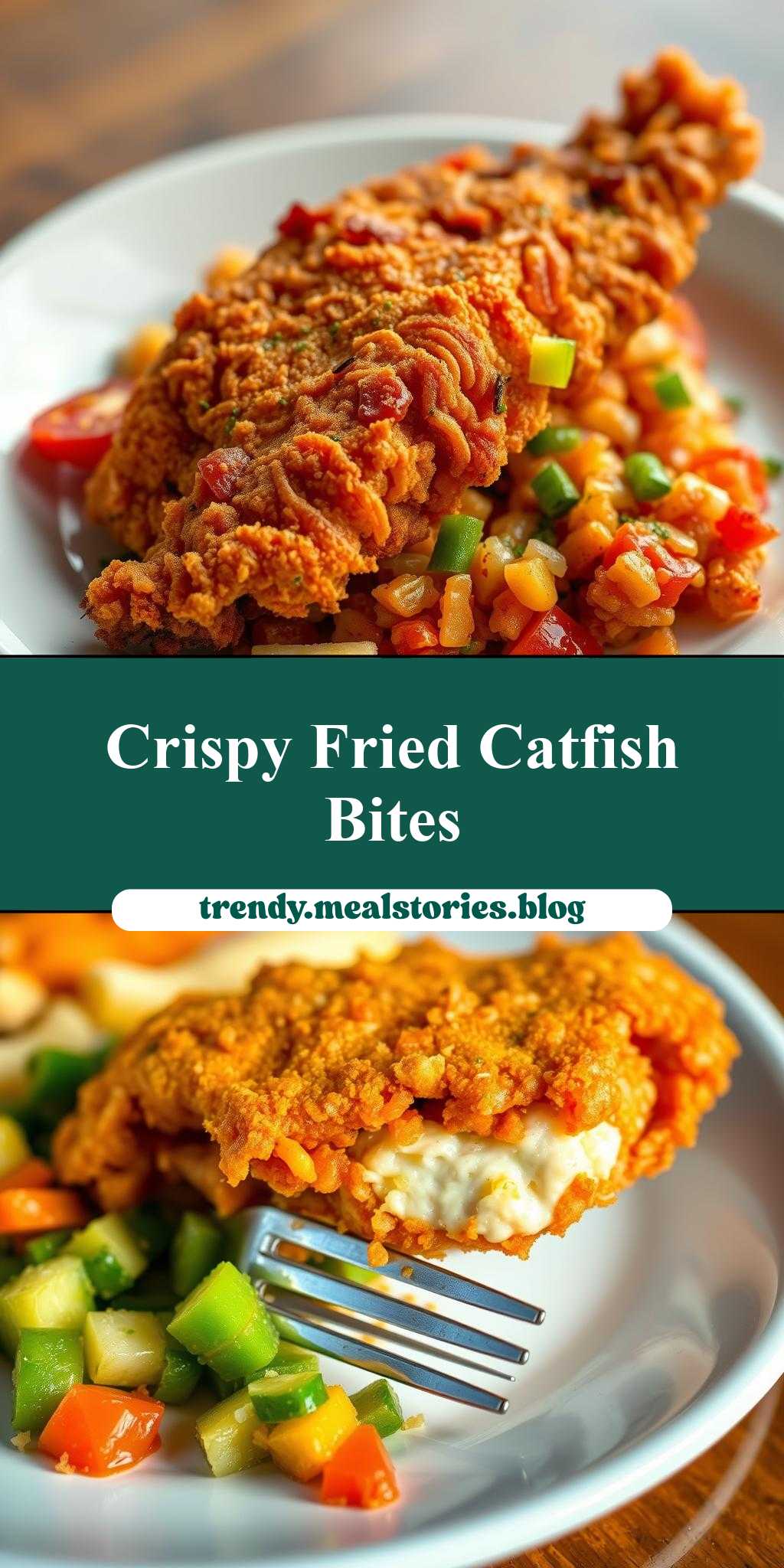
What makes the perfect comfort food dish, especially when it comes to Southern cuisine? This tremendous Southern-Style Fried Catfish recipe is a quick and easy weeknight dinner solution, made with crispy cornmeal and tender catfish fillets. Save this idea for a homemade family favorite meal tonight.
Tremendous Southern-Style Fried Catfish
Introduction
Southern-style fried catfish is a classic dish that embodies the warm, comforting essence of traditional Southern cuisine. This recipe is not only easy to follow, but it also yields an incredibly flavorful and crispy final product that is sure to impress both family and friends. The beauty of this dish lies in its simplicity and the use of everyday ingredients, making it accessible to cooks of all levels. With a few simple steps and some handy tips, you can create a mouth-watering, tremendous Southern-style fried catfish that will become a staple in your household.
Why This Works
- Flavor balance and ingredient accessibility: This recipe strikes a perfect balance between the delicate flavor of catfish and the bold, crispy exterior achieved through a well-seasoned breading. The ingredients are readily available in most supermarkets, making it easy to prepare.
- Ease of preparation: Despite the impressive results, the preparation and cooking process are surprisingly straightforward. With a few basic kitchen tools and some simple techniques, you can achieve restaurant-quality fried catfish at home.
- Impressive results with minimal effort: The combination of a light, airy batter and the right frying technique ensures that the catfish comes out crispy on the outside and tender on the inside, with minimal effort required from the cook.
Key Ingredients
The main ingredients for this recipe include fresh catfish fillets, all-purpose flour, cornmeal, spices (such as paprika, garlic powder, and onion powder), buttermilk, eggs, and vegetable oil for frying. For those looking for practical substitutions, cod or tilapia can be used in place of catfish, and almond milk or regular milk can be used as a substitute for buttermilk. The key to achieving the Southern-style flavor is in the balance of spices and the use of buttermilk for marinating the fish, which adds a tangy flavor and helps to tenderize the fish.
Instructions
- Step 1: Begin by preparing the catfish fillets. Rinse them under cold water, pat them dry with paper towels, and set them aside. In a large bowl, mix together the flour, cornmeal, paprika, garlic powder, onion powder, salt, and pepper. In a separate bowl, whisk together the buttermilk and eggs to create the marinade.
- Step 2: Place the catfish fillets in the buttermilk marinade, making sure they are fully submerged. Cover the bowl with plastic wrap and refrigerate for at least 30 minutes to allow the fish to marinate. This step is crucial for tenderizing the fish and adding flavor.
- Step 3: Remove the catfish from the marinade, allowing any excess to drip off. Dredge the fillets in the flour mixture, pressing the coating onto the fish to ensure it adheres. This step is where the magic happens, as the combination of the wet marinade and the dry flour mixture creates a crispy, golden-brown exterior.
- Step 4: Heat about 1/2-inch of vegetable oil in a large skillet over medium-high heat until it reaches 350°F. Carefully place the coated catfish fillets in the hot oil. Fry for 5-7 minutes on each side, or until the fish is golden brown and flakes easily with a fork. Remove the fried catfish from the oil with a slotted spoon and place it on a paper towel-lined plate to drain any excess oil. Serve hot and enjoy!
Handy Tips
- Always use fresh and high-quality ingredients to ensure the best flavor and texture. Fresh catfish will have a better texture and flavor than frozen or old fish.
- Do not overmarinate the catfish, as this can make it too soft and prone to breaking apart during frying. 30 minutes to an hour is sufficient for marinating.
- Use the right oil for frying. Vegetable oil or peanut oil is best for frying because they have a high smoke point, which means they can be heated to a high temperature without burning or smoking.
Heat Control
Heat control is crucial when frying the catfish. The ideal temperature for frying is between 350°F and 375°F. If the oil is too hot, the exterior will burn before the interior is fully cooked. If the oil is not hot enough, the catfish will absorb too much oil and be greasy. Use a thermometer to monitor the temperature of the oil. Also, do not overcrowd the skillet, as this can lower the oil temperature. Fry the catfish in batches if necessary, to ensure they have enough room to cook evenly.
Crunch Factor
Achieving the right crunch factor is what sets great fried catfish apart from the average. The key to a crispy exterior is in the breading process and the frying technique. Ensure that the catfish fillets are fully coated in the flour mixture and that the oil is at the right temperature. Also, do not stir the catfish too much while it’s frying, as this can prevent the formation of a crispy crust. Let it cook undisturbed for a couple of minutes on each side to allow the crust to form.
Pro Kitchen Tricks
- For an extra crispy coating, you can chill the breaded catfish fillets in the refrigerator for 30 minutes before frying. This helps the coating to set and adhere better to the fish.
- Use a cast-iron skillet for frying, as it retains heat well and can achieve a high temperature, which is ideal for frying.
- Do not skip the step of patting the catfish dry with paper towels before marinating. Excess moisture can prevent the breading from adhering properly to the fish.
Storage Tips
- Leftover fried catfish can be stored in an airtight container in the refrigerator for up to 2 days. Reheat it in the oven at 350°F for about 10-15 minutes, or until it’s heated through and crispy again.
- For longer storage, fried catfish can be frozen. Place the cooled catfish in a freezer-safe bag or container and store it in the freezer for up to 3 months. Reheat it in the oven as described above.
- When storing or reheating, make sure the catfish is heated to an internal temperature of at least 145°F to ensure food safety.
Gift Packaging Ideas
While fried catfish is typically served as a main dish, it can also be packaged as a gift in certain contexts, such as a Southern-style food basket. If gifting, consider packaging the catfish in a decorative tin or airtight container, accompanied by traditional Southern sides like hushpuppies, coleslaw, or baked beans. Add a personal touch with a handwritten recipe card or a small bottle of hot sauce.
Flavor Variations
- Different spices: Experiment with various spice blends, such as Cajun seasoning, Old Bay, or a homemade mix of chili powder, cumin, and smoked paprika, to give your fried catfish a unique flavor.
- Creative toppings: Serve your fried catfish with creative toppings like remoulade sauce, tartar sauce, or a spicy mango salsa to add an extra layer of flavor and texture.
- Ingredient swaps: For a lighter version, you can use panko breadcrumbs instead of regular breadcrumbs for a crisper coating, or use grilled or baked catfish as a healthier alternative to fried.
Troubleshooting
- Texture problems: If your fried catfish turns out too greasy, it may be because the oil was not hot enough. If it’s too dry, it could be overcooked. Adjust the frying time and temperature as needed.
- Ingredient replacements: If you don’t have buttermilk, you can make a substitute by mixing 1 cup of milk with 1 tablespoon of white vinegar or lemon juice. Let it sit for 5-10 minutes to thicken before using.
- Over/undercooking signs: The catfish is done when it flakes easily with a fork and reaches an internal temperature of 145°F. If it’s undercooked, it will be soft and mushy. If it’s overcooked, it will be dry and flake apart too easily.
FAQs
- Can I freeze it? Yes, fried catfish can be frozen for up to 3 months. Store it in a freezer-safe bag or container and reheat it in the oven when you’re ready to serve.
- Is it gluten-free? The recipe as described contains gluten due to the all-purpose flour. However, you can make it gluten-free by substituting the flour with a gluten-free flour mix and ensuring that the other ingredients are gluten-free.
- Can I double the recipe? Yes, you can easily double or triple the recipe to serve a larger crowd. Just be sure to fry the catfish in batches if necessary, to prevent overcrowding the skillet.
Conclusion
With its crispy exterior, tender interior, and rich, Southern flavor, this tremendous Southern-style fried catfish recipe is sure to become a favorite. Whether you’re a seasoned cook or just starting out, the steps are easy to follow, and the result is well worth the effort. Feel free to experiment with different spices and toppings to make the dish your own, and don’t hesitate to share your creations with friends and family. Happy cooking, and remember, the key to a great fried catfish is in the details – from the marinade to the frying technique, every step counts in achieving that perfect crunch and flavor.
Tremendous Southern-Style Fried Catfish
A classic Southern dish featuring crispy fried catfish, perfectly balanced with a tangy buttermilk marinade and a blend of spices, resulting in a tender interior and a crunchy exterior.
🥘 Ingredients
👩🍳 Instructions
-
1Prepare the catfish fillets by rinsing them under cold water and patting them dry with paper towels.
-
2Mix the flour, cornmeal, paprika, garlic powder, onion powder, salt, and pepper in a bowl.
-
3Marinate the catfish fillets in buttermilk mixed with eggs for at least 30 minutes.
-
4Dredge the marinated catfish in the flour mixture, pressing the coating onto the fish to ensure it adheres.
-
5Fry the coated catfish fillets in hot vegetable oil at 350°F for 5-7 minutes on each side, or until golden brown and cooked through.
-
6Remove the fried catfish from the oil and place it on a paper towel-lined plate to drain excess oil. Serve hot.